
Smart Charging EMS: architecture, safeguards and technical differentiation
A technical deep dive: two-layer EMS architecture, phase-aware control, fail-safe safeguards and how we position against total-power DLM.

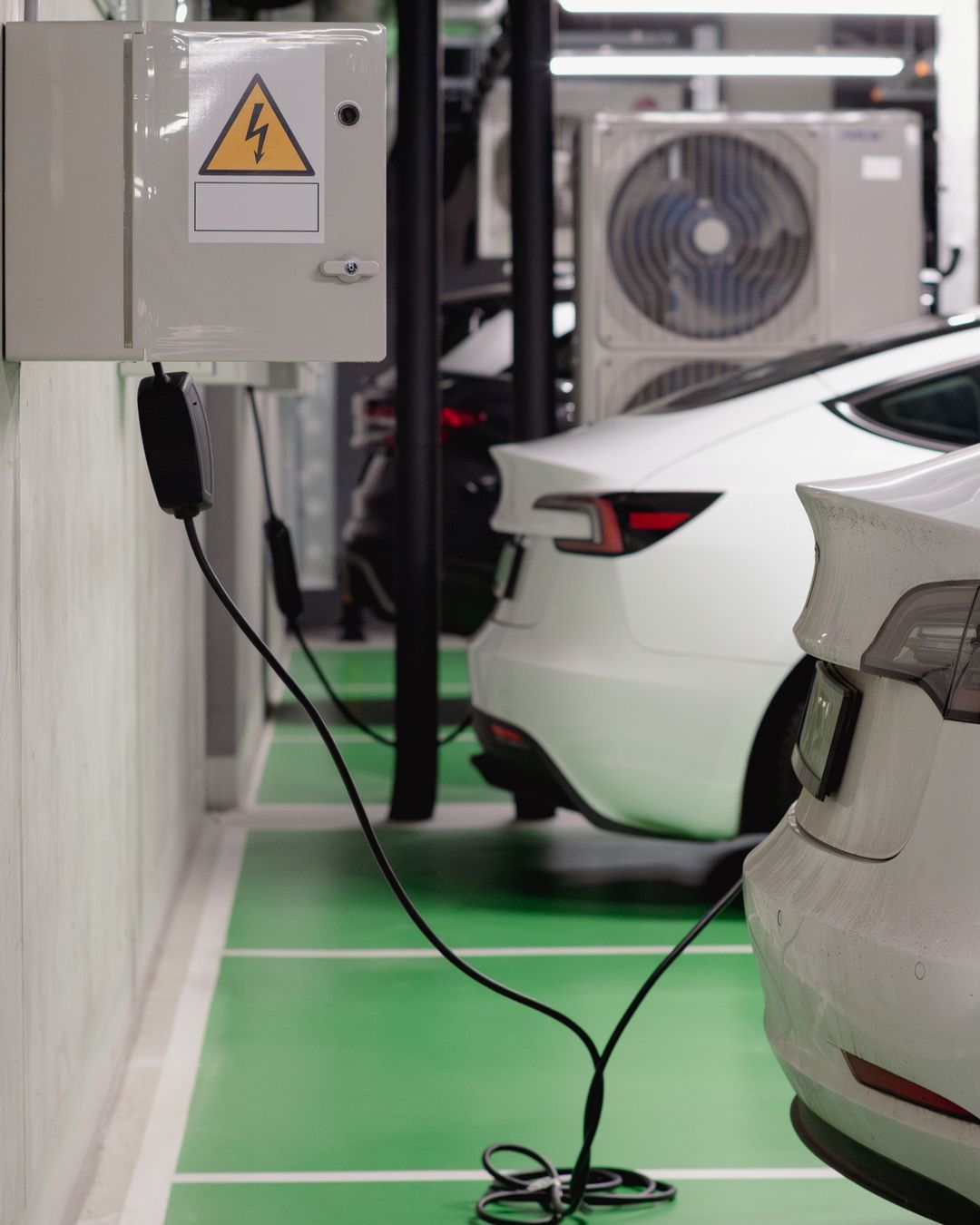
In an earlier article we covered the fundamentals of smart charging. Now for the second, more technical level: how is a Smart Charging EMS module designed to stay useful, safe and credible once a site becomes strategic? Our conviction fits in one sentence — good charging control should not only optimise, it should protect the site and integrate with what already exists.
Moving beyond “marketing DLM”
Many players talk about Dynamic Load Management as a generic capability: sharing available power across chargers to stay below a limit. That matters — but on a workplace car park, a bus depot, a light-commercial fleet site or a solar-powered installation, charging never operates in isolation.
So the real question is not just “how many kilowatts are left?”, but “how do you compute that budget, arbitrate it, and guarantee no decision puts the site at risk?”. Our logic already builds on integrations with several energy environments (Schneider, WIT, Lacroix, ioThink, Enphase) and stays open through APIs — adding intelligence without forcing yet another black box onto the site.
Two layers, two responsibilities
Our answer rests on a clear separation: the EMS computes the capacity truly available from the delivery point and the site’s energy flows; the smart charging engine then allocates that capacity across vehicles according to the chosen strategy.
On paper the separation looks obvious. In practice it becomes a real differentiator as soon as a site has to integrate building, solar, battery, fleet or per-phase logic: it is no longer just load balancing, but energy orchestration operators can actually use in the field.
Protect each phase, not just the total
This is our most concrete differentiator. A site can stay under its total ceiling and still trip if a single phase is overloaded — typically when a single-phase vehicle charges on a three-phase installation.
A single-phase EV (≤ 7.4 kW) draws all its current on one phase. On the total it looks fine; on the real grid, one phase can trip. Above 7.4 kW → multi-phase → ÷3. Unknown phase → ÷3 by default, worst-case optional.
Many platforms still reason in total power first. That logic is enough for simple cases, but it does not protect a site where the electrical risk actually happens. Chargekeeper builds this in with phase-aware control variants, precisely so a site never looks “within limits” overall while staying electrically fragile.
Safe by design
The gap between a sales pitch and a serious architecture shows up in how the system behaves under trouble: a charger that stops responding, a stale measurement, conflicting constraints. Our safety does not rest on a vague promise but on concrete mechanisms, designed so that whenever there is doubt, the system tightens rather than relaxes.
The delivery point also remains the hard limit: the engine never computes an allocation that would trip the site’s electrical ceiling. These safeguards are deliberately conservative — and that is exactly what makes cloud control credible when a site becomes business-critical.
An honest cloud-native position
We do not sell a local hardware EMS running a millisecond loop: that is not our positioning, and we own that honestly. A local box hugs the limit; we keep a safety margin — but the price is margin, not a tripping risk. In return, the cloud brings intelligence no local box has.
Where we stand out
The market still blends several levels of promise behind the same vocabulary. Our positioning is to bridge them without pretending they are all equivalent.
On phase balancing in particular, it is a very concrete differentiator: protecting a site electrically is not just a sum of kilowatts.
Built for use cases that grow in complexity
This positioning matters most where charging becomes an operational layer, not a secondary service:
- Companies balancing building usage and employee charging;
- Fleets that need real operational priorities;
- Bus and truck depots, where every control mistake affects service;
- Solar-coupled projects that maximise local energy without weakening the delivery point.
Our view
The market talks a lot about optimisation. We believe it should talk just as much about robustness, interoperability and technical honesty. A charging platform should do more than distribute kilowatts: it should understand the site, respect its limits and integrate cleanly with its wider ecosystem.
To see how this approach maps to your own use cases, explore our Smart Charging & energy management page, try the interactive demo or get in touch with our team.